
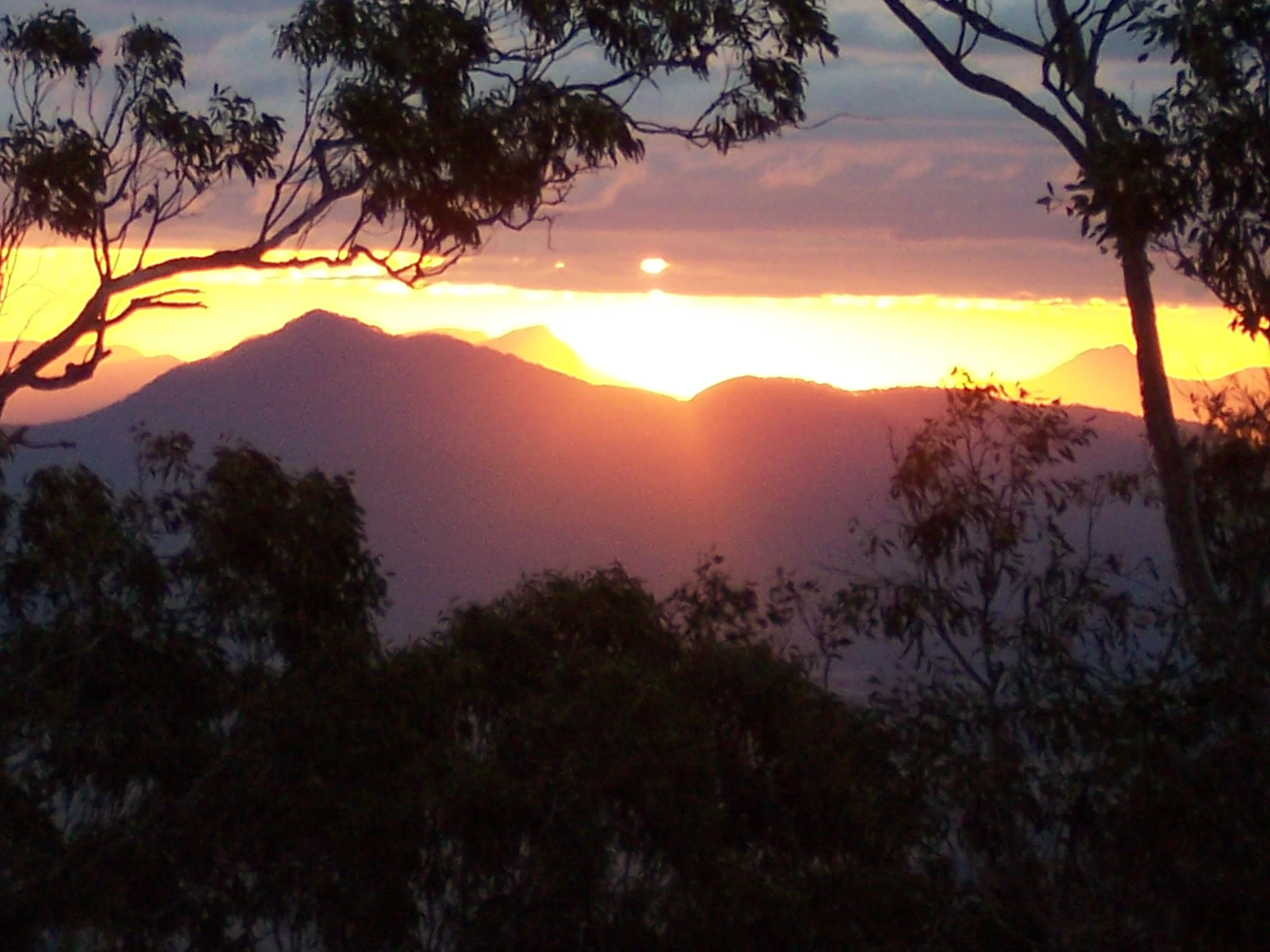
All native fauna species found in the Wild Mountains Nature Reserve are protected. Native fauna will not be fed. Food and general waste will not be disposed of in the reserve, and waste is stored so that wildlife cannot access it.
Rare and threatened fauna species that have been found in the area, or are likely to use it, are considered when planning any educational or land management activity, and impacts on these species are avoided. Special projects are undertaken from time to time on their recovery, and Wild Mountains actively participates in recovery initiatives and regular surveys. Fauna surveys here do not use tape-recorded call-back techniques for territorial species, as these may cause unacceptable stress.
Significant species
Under the Nature Conservation Act 1992, these fauna species are identified as having special significance.
Spotted-tailed Quoll
The Spotted-tailed Quoll is a solitary marsupial carnivore that ranges widely over large, sometimes overlapping territories of up to 1,000 hectares. It favours wet forests but also moves through woodland. Like a large cat with spots, it is very proficient at climbing trees, and uses tree hollows and caves for shelter and den sites. It tends to be affected by competition from wild dogs, is partial to domestic chooks, and has been destroyed as vermin in the past.
Glossy Black Cockatoo
These birds eat Allocasuarina seeds and need to drink water every day. They are creatures of habit and use the same feed trees and drinking spots from year to year. They breed in winter every second year and usually produce one offspring, needing large tree hollows for breeding. Favoured feed trees can be identified by the copious chewed seed cones that litter the ground. Allocasuarinas need to be seven years old before they produce abundant seed, so fire exclusion is vital, although they germinate in disturbed areas so the food resource moves around the landscape as trees mature and die.
Sooty Owl
A secretive bird of thick rainforest, the Sooty Owl depends on a healthy mammal fauna for survival. As a peak predator it is naturally in low densities, and pairs aggressively hold large territories. Old growth forests are the key to its conservation, and it nests in large hollows.
Albert’s Lyrebird
A shy bird of mountain rainforests, and the logo for Beaudesert Shire. It eats various insects and gastropods found in leaf litter and must forage over large areas. Males claim territories during winter and can be readily surveyed by their loud, musical territory calls. A lack of disturbance from human activities, few pest animals and unfragmented habitat will ensure their survival.
Grey Goshawk
Pairs hold large territories that usually include a mixture of rainforest and wet sclerophyll. Nests are often reused, but may be abandoned if subject to disturbance. The Grey Goshawk preys on birds and small mammals, usually in dense forest. Species survival depends on a lack of disturbance and dense old growth forests.
Koala
A mammal related to the Wombat, the Koala lives in dry eucalypt forests and relies solely on eucalyptus leaves, using a number of eucalypt species as food. Koalas can usually defend themselves, with large claws and powerful arms, and apart from Wedge-tailed Eagles taking young, they have few natural predators. They are prone to being hit by cars as they cross roads, and may be attacked on the ground by large dogs in the urban landscape. In stressed habitats they are susceptible to Chlamydia, which causes blindness and infertility. In rural areas with adequate tree density and few roads, with a natural density of around one Koala per three hectares, they ought to be safely conserved.
Chytrid Fungus protocol for frog conservation
Native frog species in the high-altitude rainforests of Eastern Australia are particularly susceptible to the introduced Chytrid Fungus (Batrachochytrium dendrobatidis), a water-borne pathogen thought to be responsible for recent frog extinctions and listed as a Key Threatening Process in NSW. It likes cool, wet conditions, is prevalent above 400 metres, is often more active in winter, and is more likely to affect stream-associated frogs. It causes a fatal disease, chytridiomycosis, attacking keratin in the skin and mouthparts of adults and tadpoles and impairing respiration through the skin.
Cleanliness and quarantine are the two key aspects of frog conservation here. When moving between creek systems, footwear and equipment must be cleaned and disinfected with a benzalkonium chloride solution without letting any enter a water body, and changing and bagging footwear between sites is a practical alternative. Vehicle wheels must be cleaned between sites, and foreign materials, especially water from another area, must not be brought into the rainforest. When handling frogs, use disposable gloves (one per frog) or cleaned, disinfected and dried hands, one bag per frog or tadpole, and never release frogs into the wild from another area.